Dark Sky Meter
An accessible way for people to measure and understand night-sky brightness with a supported phone camera. The app turns a technical quantity into a guided public experience.
Three complementary citizen science apps open the night sky to different audiences: Dark Sky Meter, Dark Sky Meter Pro and Loss of the Night.
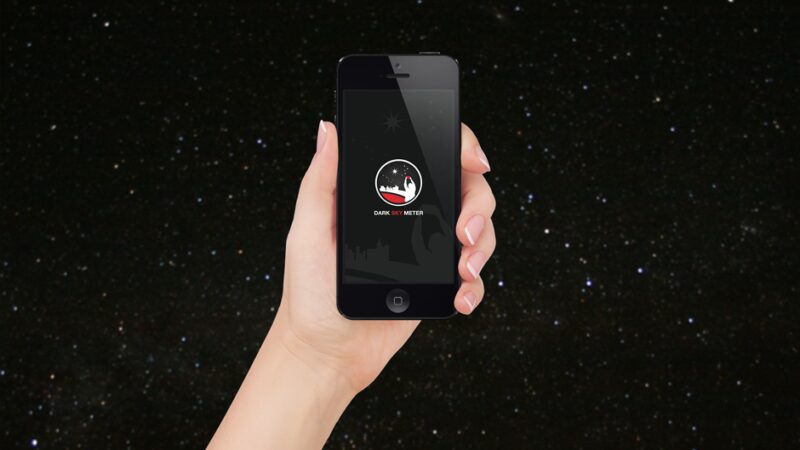
Pocket Science founder Norbert Schmidt bought a Unihedron meter while searching for darker skies, then wondered whether the smartphone camera in his pocket could do the same job. Working with a fellow amateur astronomer, he measured everywhere and calibrated phone after phone until the method became reliable. When the growth in iPhone models demanded a complete rewrite, help from a team at Complutense University of Madrid led to a new calibration method. The current Dark Sky Meter now performs on par with professional light-at-night meters.
An accessible way for people to measure and understand night-sky brightness with a supported phone camera. The app turns a technical quantity into a guided public experience.
Designed for amateur astronomers and researchers who want a more specialised light-pollution measurement tool and a closer connection to the underlying observing workflow.
Guides Android users through identifying which stars are visible from their location. Pocket Science took over development from IGB, preserving and continuing an established citizen science method.
Dark Sky Meter was invented by Pocket Science and is 100% owned by us. More than 50,000 measurements have been contributed through the app, which we actively update and support. Its current calibration method delivers performance on par with professional light-at-night meters at a fraction of their cost; dedicated meters typically start at $120 or more.
The three apps let a project meet people where they are: a broad public entry point, a more advanced route for amateur astronomers and researchers, and guided visual observations for Android users. Together they support outreach, measurement, research use and continuity across platforms.
Dark Sky Meter measurements depend on supported camera capabilities, acquisition conditions and the app version. For a research campaign, agree the devices, observing protocol, data access and support route in advance. Loss of the Night uses a different method: the participant’s visual assessment of which stars are visible.
For app support, include the app name and version, phone model, operating-system version and a description of the problem. For a research deployment, contact Pocket Science before the campaign so device support, participant guidance, data access and ongoing maintenance can be defined.
We can build a focused app or combine participation, sensing, dashboards, exports, secure self-hosting and long-term support in a tailor-made citizen science project.